Botticelli's Painting Birth Of Venus
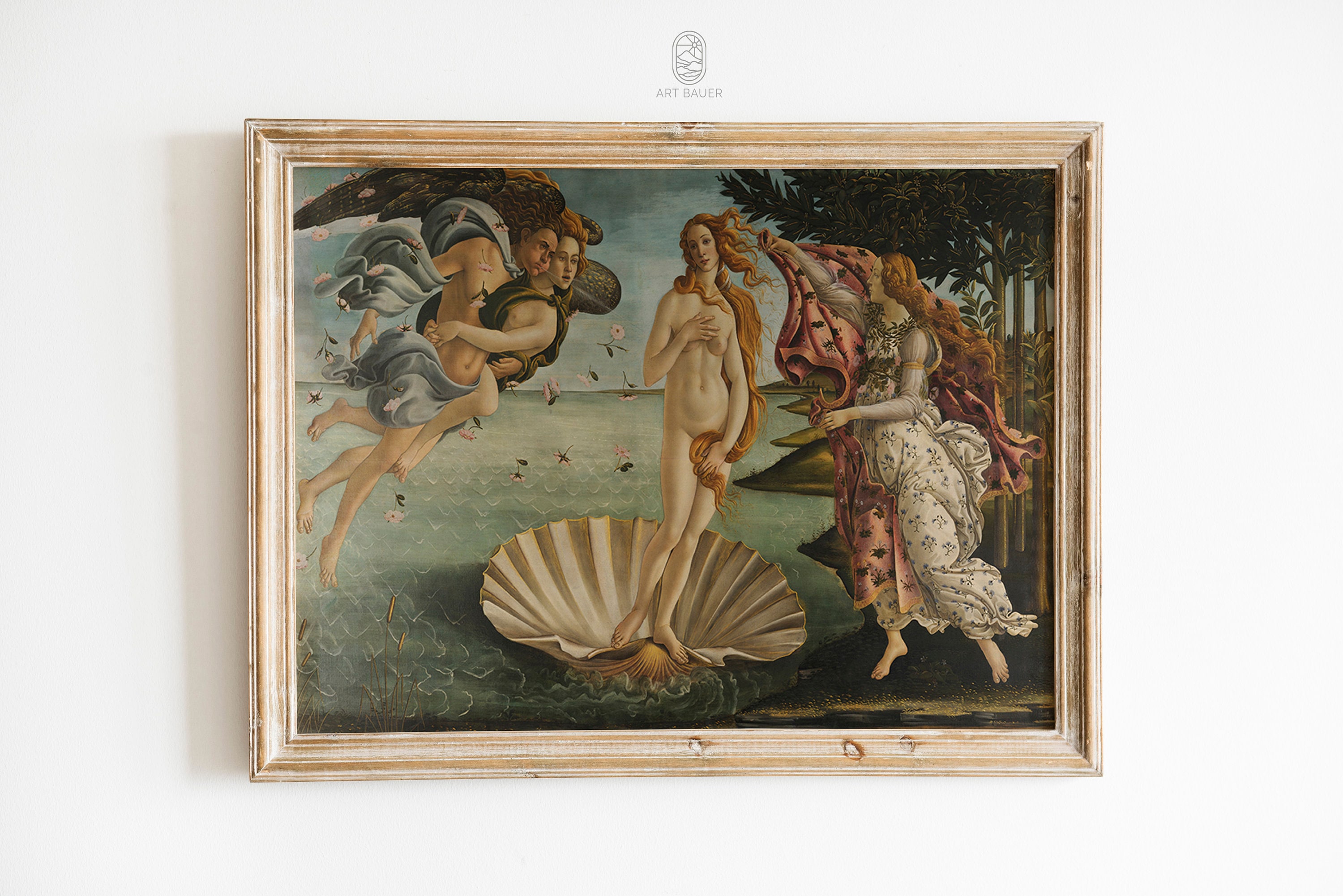
Few works of art capture the timeless allure of myth and beauty as vividly as Botticelli's painting Birth of Venus, an icon of the Italian Renaissance that continues to enchant viewers centuries after its creation.
The Historical Context of Botticelli's Birth of Venus
To understand the enduring power of Botticelli's Birth of Venus, it is essential to consider the world in which it was painted. Created in the late 15th century, most scholars date the work to around 1484–1486, during the height of the Florentine Renaissance under the patronage of Lorenzo de' Medici, known as Lorenzo the Magnificent. This was a time when humanist scholars were rediscovering classical texts, and wealthy families like the Medici sought to align themselves with the cultural glory of ancient Greece and Rome. The painting was likely commissioned for a private villa, reflecting the Renaissance fascination with reviving antique themes in a Christian yet celebratory spirit.
The intellectual movement known as Neoplatonism, which emphasized the idea that physical beauty could reflect divine truth, profoundly influenced Botticelli's circle. In this context, the Birth of Venus was not merely a decorative mythological scene but a philosophical statement about the journey of the soul toward divine love and enlightenment. By placing a newly arrived goddess in a natural, idyllic landscape, the work bridges the earthly and the spiritual, making it a perfect embodiment of the era's intellectual and artistic aspirations.
The Composition and Visual Language of the Painting
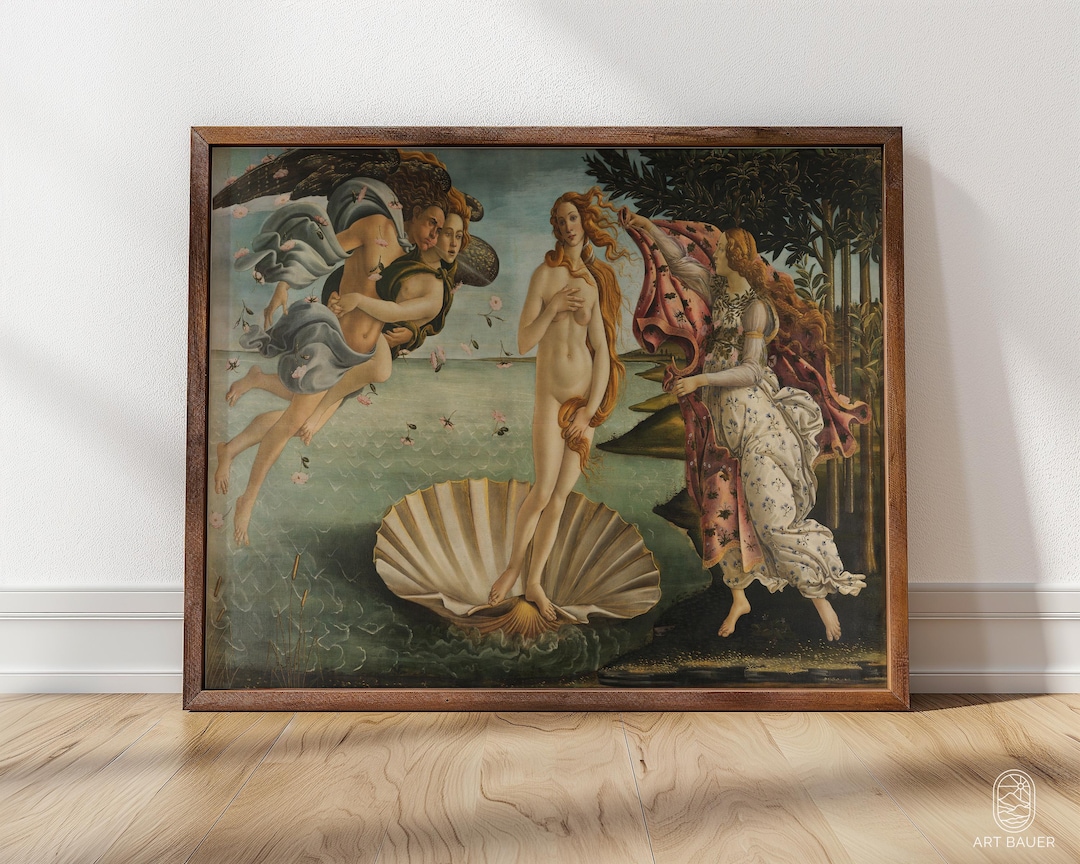
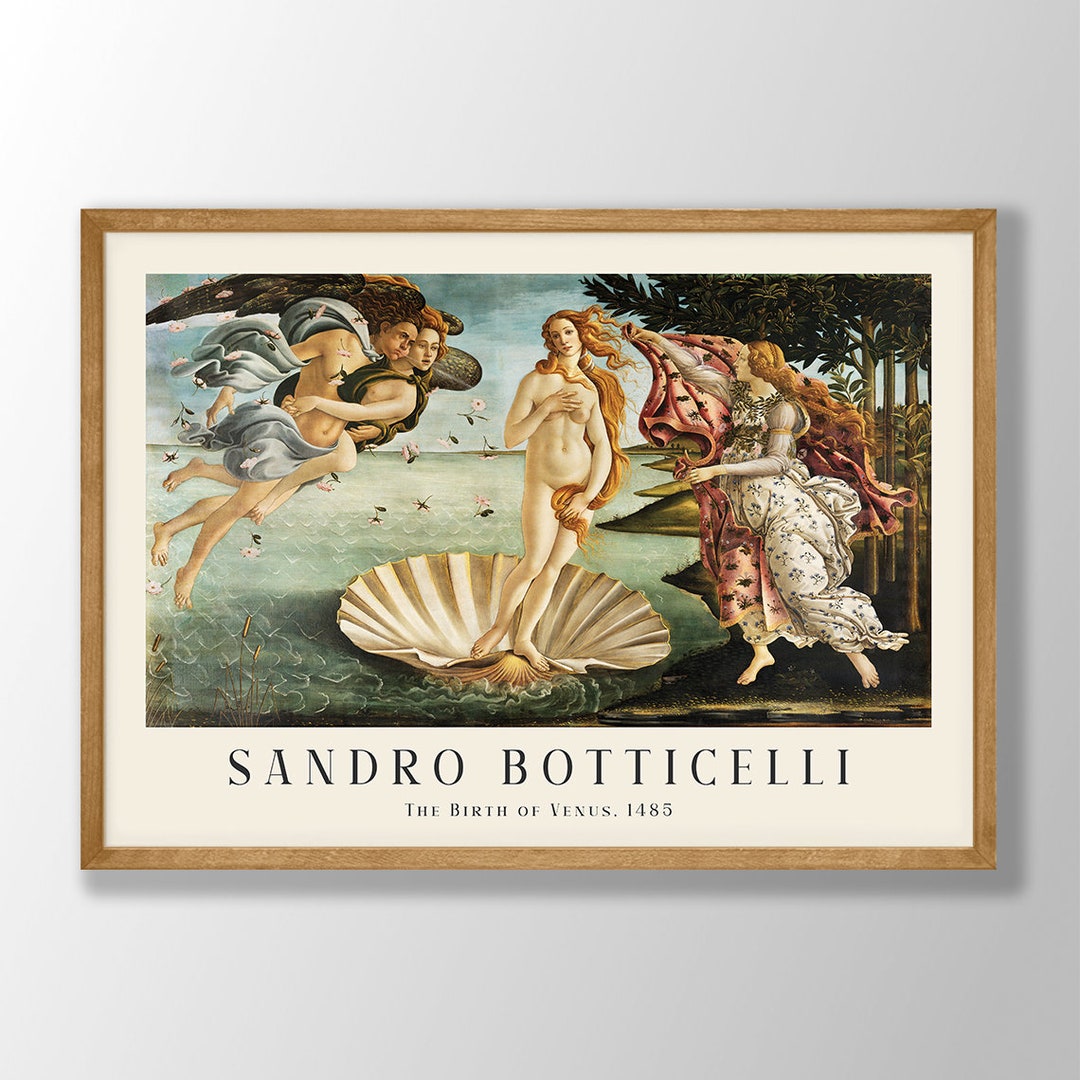
At first glance, the composition of Botticelli's Birth of Venus draws the eye along a gentle diagonal, from the left where the wind gods Zephyrus and Aura blow Venus toward the shore, to the right where the Horae waits to clothe her. This carefully arranged movement creates a sense of graceful procession, as if the viewer is witnessing a ceremonial arrival rather than a random mythological event. The use of line is elegant and refined, with Venus's flowing hair and the curves of her body echoing the gentle arcs of the landscape, resulting in a harmonious balance that feels almost musical.
Color plays a crucial role in establishing the painting's ethereal mood. Botticelli employs a soft, pastel palette dominated by blues, pinks, and whites, which contributes to the otherworldly quality of the scene. The contrast between the pale, almost luminous skin of Venus and the darker, more turbulent tones of the sea and sky heightens her presence at the center of the composition. This deliberate use of color reinforces the theme of divine emergence, suggesting that the goddess and her world are made of a different, more perfect substance than the mundane realm.
The Mythological Narrative and Symbolism
The Birth of Venus depicts the Roman goddess arriving at the shore after her birth, when she emerged fully grown from the sea foam. In the painting, she stands on a giant scallop shell, her posture modest yet regal, covering herself with one hand while the other gently holds her hair in place. This pose, known as the Venus pudica, references classical sculptures and paintings that explored themes of modesty and idealized femininity. Yet Botticelli imbues her with a serene confidence that transforms a traditional motif into something deeply personal and contemplative.
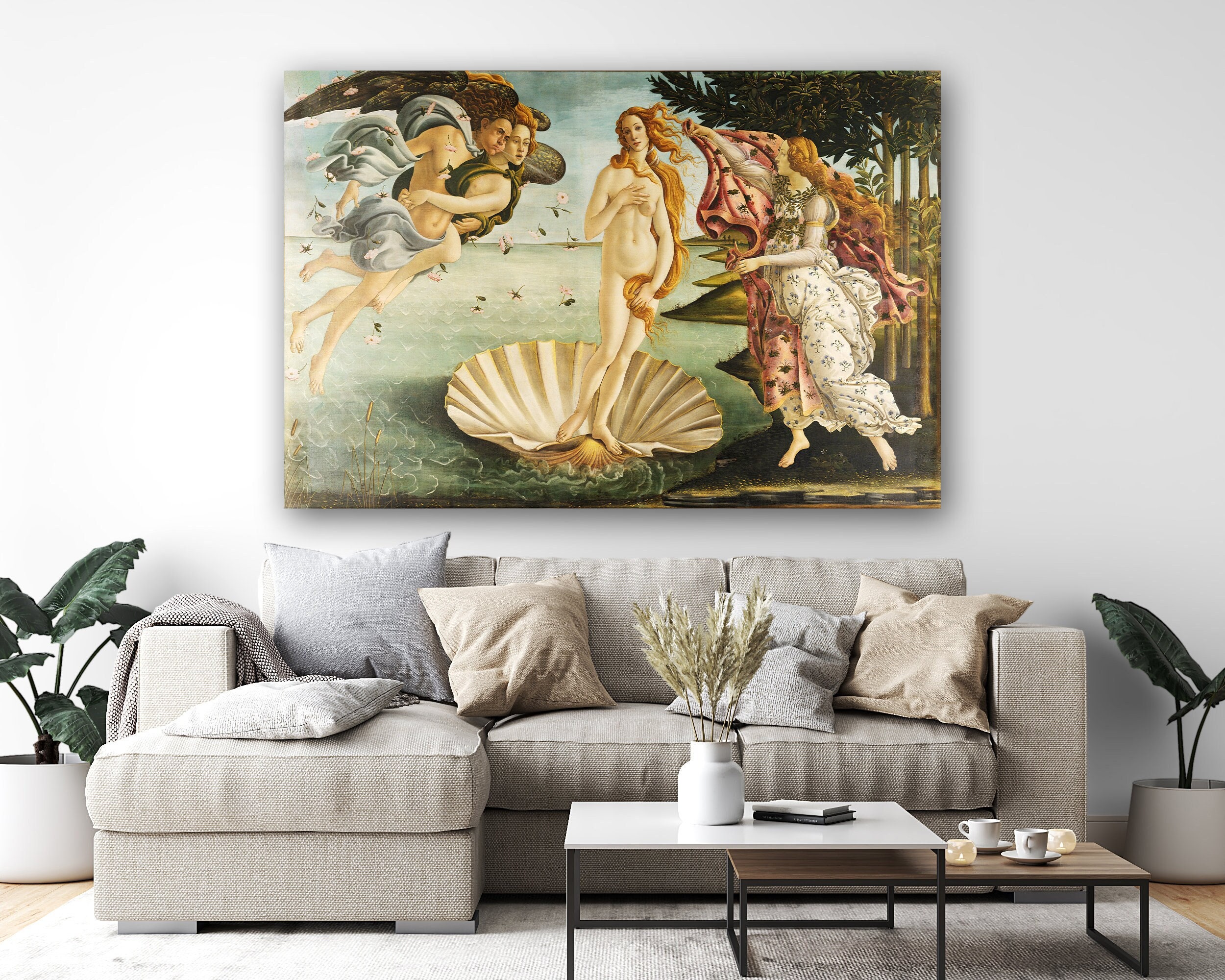
Surrounding Venus are figures rich with symbolic meaning. The wind gods, with their intertwined bodies and spirited expressions, represent the forces of nature that facilitate her arrival. On the right, the figure traditionally identified as the Hora of Spring holds a flowered cloak, ready to clothe the goddess, symbolizing the renewal and fertility associated with springtime. These surrounding characters are not mere decoration; they form a narrative network that elevates the scene from a simple mythological illustration to a complex commentary on love, beauty, and the cycles of nature.
The Influence and Legacy of Botticelli's Birth of Venus
Since its creation, Botticelli's Birth of Venus has influenced countless artists, poets, and designers, becoming a cornerstone of Western visual culture. During the 19th century, as interest in the Italian Renaissance revived, the painting was celebrated for its line, grace, and poetic sensibility, helping to shape the popular image of the Renaissance as an age of beauty and harmony. It has appeared in everything from academic textbooks to modern advertisements, demonstrating its remarkable capacity to adapt to new contexts while retaining its iconic status. Its image is instantly recognizable, even to those with limited familiarity with art history.
The painting's legacy extends beyond the art world into broader cultural conversations about beauty, gender, and representation. Interpretations of Venus have evolved over time, with some viewing her as a passive object and others celebrating her as a symbol of feminine strength and autonomy. Contemporary viewers often bring new layers of meaning to the work, asking questions about the gaze, the portrayal of the female form, and the relationship between myth and reality. This ongoing dialogue ensures that Botticelli's Birth of Venus remains a living document, continually revisited and reinterpreted by each new generation.
Technical Details and Preservation
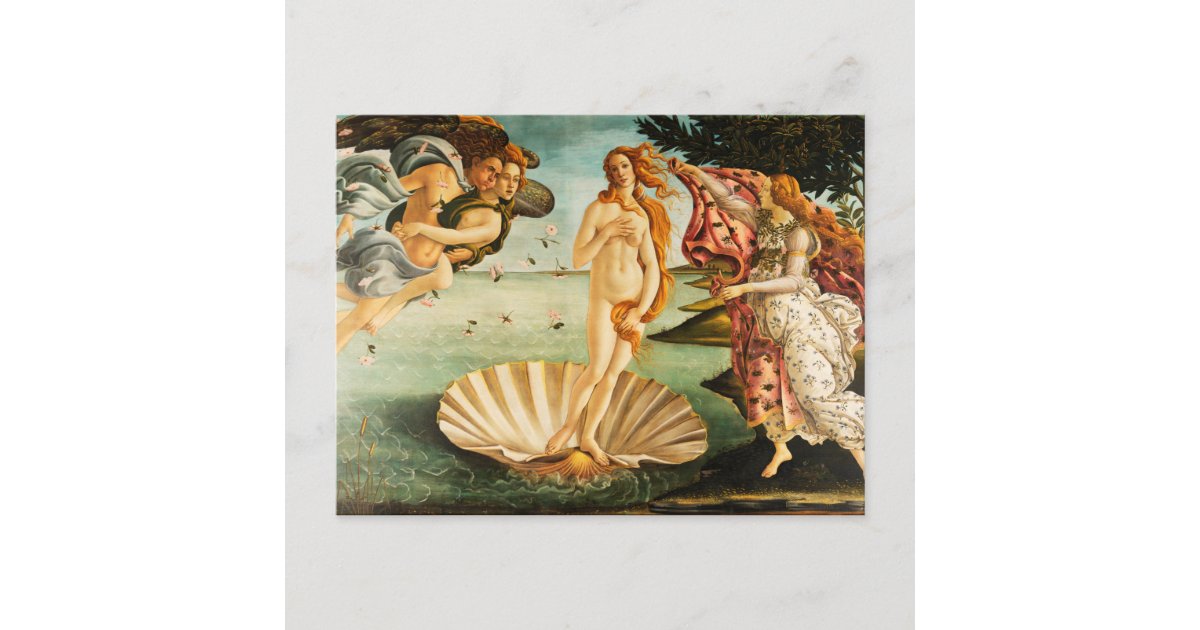
Botticelli executed this masterpiece using tempera on canvas, a technique that was less common in Florence at the time than fresco, but which allowed for greater portability and subtle color transitions. The choice of canvas, rather than the more traditional wood panel, may have been influenced by the desire to create a work that could be easily moved or displayed in different settings. The relatively thin paint layer and delicate handling of the figures reveal an artist deeply concerned with linear elegance and atmospheric effect, prioritizing poetic expression over strict naturalistic detail.
Over the centuries, the painting has undergone several restorations to address damage from accumulated grime, earlier restoration attempts, and environmental wear. These efforts have helped to stabilize the fragile pigments and reveal more of the original brilliance beneath later deposits. Modern conservation techniques allow scholars and the public to appreciate the work with greater clarity, ensuring that the subtle interplay of line and color can continue to inspire admiration. Understanding these technical aspects deepens our appreciation of the skill and foresight required to preserve such a fragile yet enduring vision.
Conclusion
Botticelli's painting Birth of Venus remains a profound synthesis of myth, beauty, and technical mastery, embodying the intellectual and artistic spirit of its time while continuing to speak to contemporary audiences. Its elegant composition, poetic symbolism, and emotional resonance have secured its place as one of the most celebrated images in the history of art. By exploring the historical, visual, and cultural dimensions of this work, we gain a richer understanding of why it continues to captivate, inspire, and challenge viewers across centuries and borders.
O Nascimento de Vênus de Botticelli: A Grande Arte Explicada:
Meu outro canal, Great Books Explained, aqui - https://www.youtube.com/@greatbooksexplained371 Considere apoiar este canal no ...
