Etienne De La Boétie

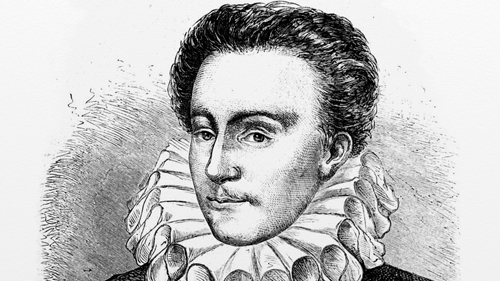
Few political thinkers ignite the imagination like Étienne de La Boétie, a sixteenth century French jurist and philosopher whose quiet essay on voluntary servitude still unnerves rulers today. Born in 1530 into a noble family in Sarlat, La Boétie combined a rigorous legal education with a poetic sensibility, becoming a close friend of Michel de Montaigne and a sharp observer of power. His short but profound Discourse on Voluntary Servitude dissects how domination persists not only through force but through habit, illusion, and the consent of the dominated, making him a forerunner of modern theories of resistance and civil disobedience.
The Life and Historical Context of Étienne de La Boétie
Étienne de La Boétie emerged in a time of religious turmoil, when France was convulsed by the Wars of Religion between Catholics and Huguenots. Trained as a lawyer at the University of Orléans, he entered public service and became a judge, yet his restless mind pushed him toward philosophy and political reflection. His friendship with Montaigne shaped his intellectual development, and his early death at thirty-two in 1563 cut short a career that might have transformed political thought. Nevertheless, his surviving works, especially the Discourse, secured his place in the history of ideas as a lucid critic of tyranny.
In the Discourse, La Boétie asks a simple but devastating question: why do people obey rulers who have no legitimate authority beyond their own willingness to command. He rejects the idea that kings rule by divine right or sheer military strength alone, arguing instead that power depends on a web of habits, flattery, and self interest that binds subjects to their masters. By tracing the mechanisms through which rulers extract compliance, he reveals that domination is often a fragile structure built on the passive obedience of the many, a thesis that would echo through later revolutionary thought.
The Core Argument of the Discourse on Voluntary Servitude
At the heart of La Boétie’s analysis is the concept of voluntary servitude, a phrase that captures the paradox of subjects who seem complicit in their own subjugation. He observes that tyrants rarely rule through pure force; instead, they cultivate rituals, symbols, and privileges that make obedience appear natural or even desirable. People conform not only out of fear but out of ambition, habit, and the desire to imitate those in power, creating a self perpetuating cycle where submission is mistaken for order and stability.
La Boétie suggests that if individuals collectively withdrew their consent, the edifice of tyranny would collapse like a house of cards. This insight prefigures later theories of social contract and nonviolent resistance, as it implies that rulers govern only because subjects allow them to. By examining the psychology of obedience, he invites readers to question the legitimacy of authority and to consider how customs, laws, and institutions can turn oppression into a seemingly natural condition.
Style, Rhetoric, and Literary Merit
Beyond its political significance, the Discourse on Voluntary Servitude is celebrated for its elegant style and incisive rhetoric. La Boétie blends legal argumentation with classical allusions, irony, and vivid imagery, crafting a text that is both philosophical and literary. His use of paradox and irony invites readers to see through the illusions that sustain power, turning a short essay into a timeless meditation on freedom and responsibility.
He frequently employs comparisons drawn from history, mythology, and everyday life, making abstract ideas accessible to a broad educated audience. This rhetorical richness helps explain why the Discourse has been read and reread by revolutionaries, scholars, and activists, each finding new layers of meaning in his critique of domination. His work stands as a model of how theoretical reflection can be both rigorous and engaging, blending moral clarity with stylistic grace.
Influence on Later Political Thought and Movements
Étienne de La Boétie’s ideas resonated far beyond his own century, influencing Enlightenment thinkers, revolutionary movements, and modern theories of civil resistance. His emphasis on the fragility of authoritarian rule inspired later writers such as Montesquieu, Rousseau, and more recently, scholars of nonviolent action who study how ordinary people can undermine dictatorships. The Discourse on Voluntary Servitude is often cited alongside works by Thoreau and Gandhi as a precursor to the philosophy of refusing unjust obedience.
In the twentieth century, anti totalitarian thinkers rediscovered La Boétie when analyzing how regimes maintain control through propaganda, bureaucracy, and the complicity of citizens. His insight that power rests on consent rather than mere force has made him a touchstone for movements seeking democratic change without violence. By framing resistance as a reclaiming of personal and collective agency, he offers a language for challenging oppression that remains strikingly contemporary.
Modern Interpretations and Relevance Today
Today, Étienne de La Boétie speaks to audiences concerned with surveillance, media manipulation, and the subtle forms of coercion that shape workplaces, institutions, and digital life. His analysis of voluntary servitude can be seen in habits of conformity, consumerism, and performative loyalty that obscure the cost of compliance. Activists, educators, and organizers draw on his ideas to design strategies that expose the mechanisms of control and encourage people to imagine alternatives to resignation.
Reading La Boétie in the twenty first century invites a reflection on how freedom is cultivated not only through legal reform but through cultural and psychological change. By questioning the stories we tell ourselves about authority, he encourages a spirit of critical inquiry and quiet courage. In a world where power often hides behind bureaucracy, technology, and spectacle, his call to withdraw consent remains a powerful reminder that legitimacy depends on the ongoing choice of the people.
Conclusion
Étienne de La Boétie endures as a visionary thinker who understood that tyranny thrives on habits of obedience that can be unmade. His Discourse on Voluntary Servitude combines philosophical depth, literary elegance, and practical insight, offering a timeless analysis of power, consent, and resistance. By exploring the conditions that make domination possible, he empowers readers to question inherited assumptions and to imagine a society grounded in genuine freedom and mutual respect.
Comprendre le "Discours de la servitude volontaire" d'Étienne de La Boétie
"Soyez résolus de ne servir plus, et vous serez libres." Au XVIe siècle, dans son "Discours de la servitude volontaire", Étienne de ...
