How To Calculate Building Materials For A Site

When you need to calculate building materials for a site, you are starting the most practical step toward a solid, waste-free construction process.
Understand the scope and dimensions of the site
Before you calculate building materials for a site, you must clearly define the scope, size, and conditions of the area where work will take place.
Begin by measuring the main dimensions, such as length, width, and height, and confirm reference points like boundaries, neighboring structures, and access routes.
Take note of ground conditions, including soil type, slope, and possible water issues, because these factors influence the type and quantity of materials needed for foundations and drainage.

Create a detailed site plan and checklist
A clear site plan helps you visualize every area and align material quantities with each zone of the project.
- Mark zones such as excavation, foundation, structure, finishes, and services on the plan.
- Use a checklist to verify dimensions, access routes, storage areas, and safety paths.
- Update the plan and checklist as the site evolves to keep your calculations accurate and current.
Break down the project into individual components
To calculate building materials for a site accurately, separate the work into components such as excavation, foundations, structure, enclosures, and finishes.
For each component, list the required materials, for example, concrete, rebar, bricks, blocks, timber, insulation, paints, and fasteners, so that nothing is overlooked.
Consider temporary materials like scaffolding, formwork, and protection membranes, because they also represent significant volume and cost on site.

Use simple formulas and digital tools
Basic geometric formulas allow you to calculate areas, volumes, and linear meters for each component before buying materials.
- For rectangular areas, multiply length by width to get square meters.
- For volumes, multiply length by width by height, and adjust for slopes or curves using correction factors.
- For circular or irregular shapes, divide the area into simple figures, calculate separately, and then sum them up.
Digital tools such as spreadsheets, quantity calculation software, or specific construction apps can automate repetitive tasks and reduce manual errors when you calculate building materials for a site.
Account for waste, overlaps, and contingencies
On any active site, it is essential to add a waste factor to your calculations, because cuts, handling, and unforeseen issues always generate surplus demand.
Apply a percentage, usually between 5 and 15 percent depending on the material and complexity, to your quantities so that the site has enough material without overstocking unnecessarily.

- Use a higher waste factor for materials with complex shapes or strict finishing requirements.
- Coordinate deliveries to align with workflow stages, reducing storage needs and the risk of damage on site.
Verify quantities with suppliers and adjust for logistics
Once you have calculated building materials for a site, check the quantities with reliable suppliers to confirm availability, packaging, and delivery times.
Ask suppliers for technical sheets, sample sizes, and lead times, and adjust your plan if certain materials require longer procurement periods or special handling.
Also consider logistics factors, such as vehicle access, crane reach, and safe storage areas on site, because they influence how and when materials should be ordered and placed.
Monitor, record, and update quantities during execution
As the project advances, continuously monitor consumption, compare actual use with your initial calculations, and record any deviations on site.

Maintain simple registers of delivered quantities, receipts, and remaining stock, so that you can quickly detect discrepancies and prevent shortages or excesses.
Use these records to refine your methodology for future phases, improving accuracy each time you calculate building materials for a site.
Document assumptions and lessons learned
Document key assumptions, such as waste percentages, exchange rates for imported materials, and expected productivity, to make your calculations transparent and repeatable.
- Note environmental conditions, such as weather or temperature, that may affect material behavior or installation times.
- Share lessons learned with the team to align practices and improve coordination on site.
In the end, the way you calculate building materials for a site defines efficiency, cost control, and execution quality, turning careful planning into a smoother and more profitable construction process.
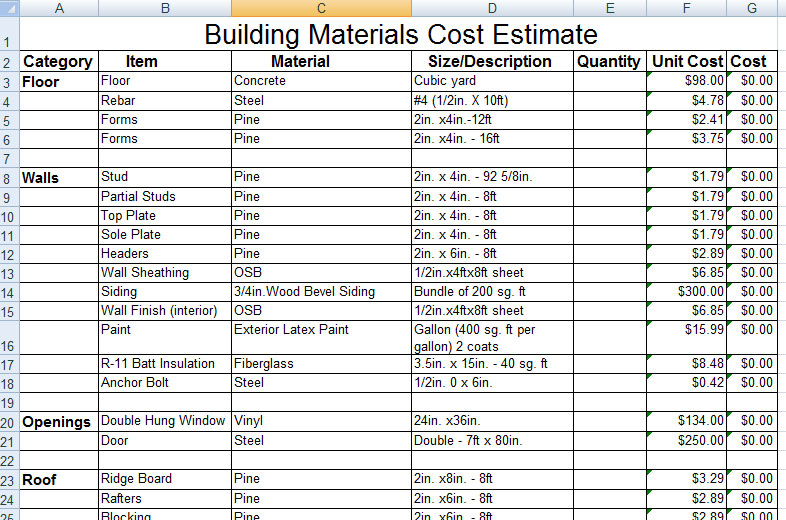
How To Estimate Quantities Of Construction Materials
Looking for tips on how to estimate quantities of construction materials? Calculating this can be really confusing with all of the ...
