How To Create A Construction Site Checklist
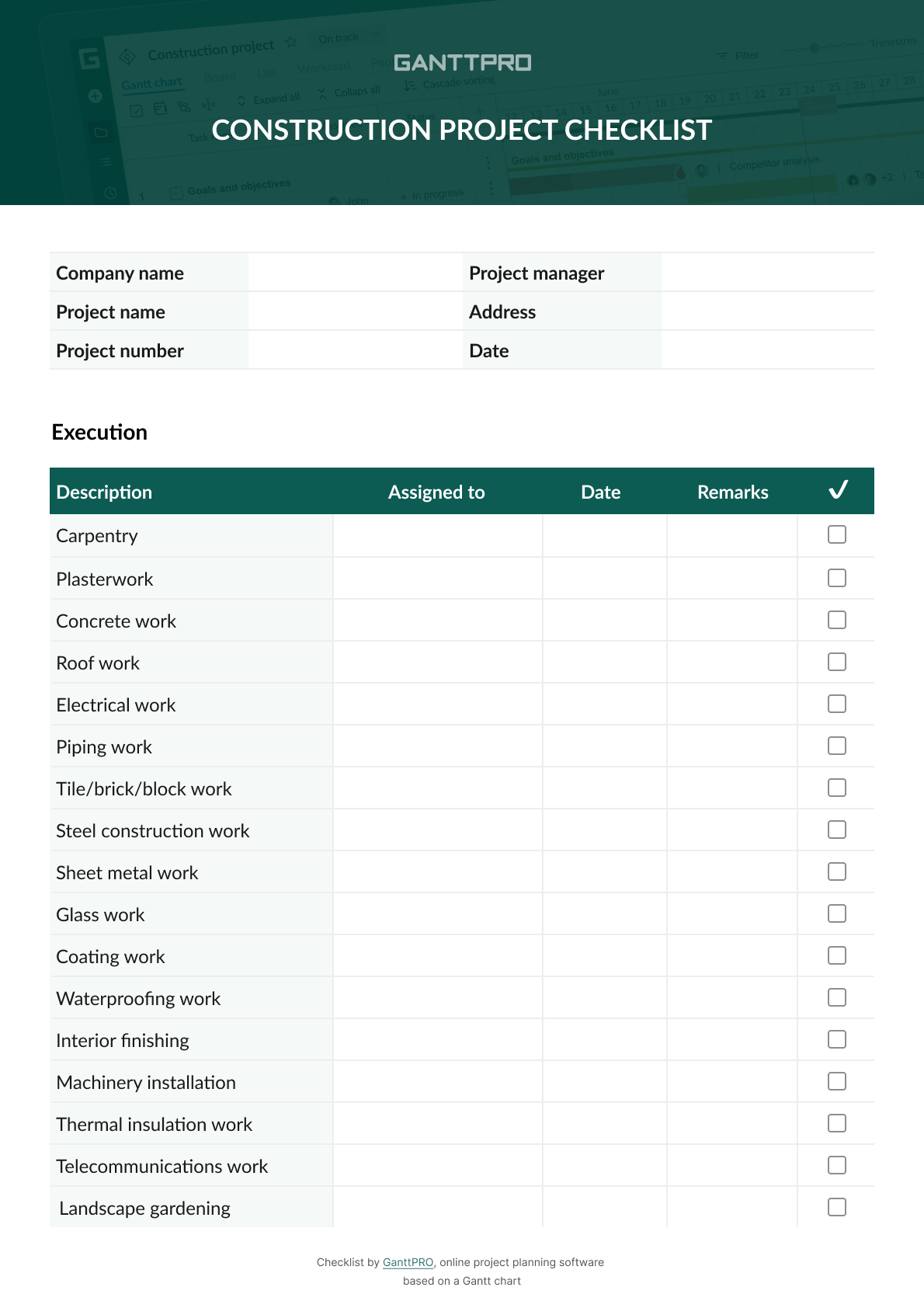
Creating a construction site checklist is the simplest way to bring order to a complex and risky environment, turning scattered tasks into a clear, trackable routine that keeps projects on time and safe. A well built checklist acts as a daily operating system, helping supervisors, workers, and contractors align on priorities, follow procedures, and document what has actually happened on site. Rather than a one time formality, the checklist becomes a living tool that supports planning, communication, compliance, and continuous improvement every day.
Clarify the Purpose and Scope of Your Checklist
Before you write a single line, decide exactly what your construction site checklist is meant to achieve. Are you focusing on safety inspections, quality control, daily progress tracking, equipment checks, or a combination of these goals. A clear purpose helps you choose the right items, avoid clutter, and ensure that every field on the form earns its place. When teams understand why the checklist exists, they are more likely to use it consistently and seriously.
The scope should define which activities, areas, and roles are covered by the checklist. Will it apply to a single shift, a specific work zone, an entire project phase, or multiple sites. By stating boundaries up front, you prevent gaps where responsibilities fall through the cracks and you make it easier to tailor checklists for different crews or stages of work. This clarity also supports better training, since new team members can quickly see what is expected on their particular assignment.
Break Down Tasks into Simple, Actionable Items
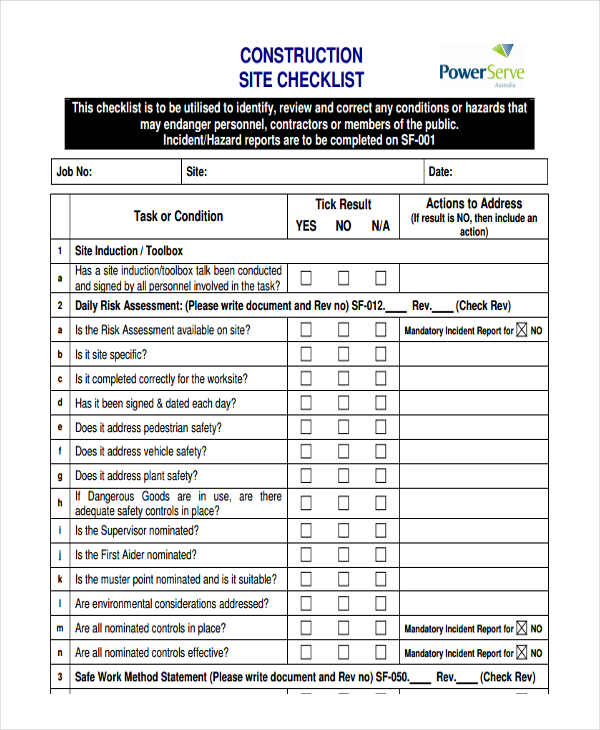
Effective checklists use plain language and short, direct statements that leave no room for misinterpretation. Instead of vague prompts, write items that tell people exactly what to look for or do, such as verify guardrails are secure or confirm fire extinguisher pressure is in the green. Group related tasks into logical sections like site setup, excavation, structural work, utilities, and closeout so the flow of the checklist matches the flow of work on site. This structure reduces cognitive load and makes it faster to complete the list without missing steps.
Include a mix of objective checks and subjective observations, such as measuring dimensions, inspecting welds, and confirming that housekeeping standards are maintained. For each item, specify who is responsible, whether it is the site manager, a safety officer, a foreman, or a specific trade partner. Adding reference to relevant standards, like local regulations or company procedures, helps teams understand the rationale behind each requirement and reinforces consistent execution across different crews.
Choose the Right Format and Level of Detail
Decide whether your construction site checklist will be digital or paper based, depending on connectivity, workflow, and team preferences. Digital tools allow for instant updates, automatic timestamps, photo attachments, and data reporting, while printed sheets can be useful in areas with limited signal or as a quick backup. Whichever format you choose, keep the layout clean, with enough space for comments, signatures, and dates so that every inspection or shift handover leaves a clear record.
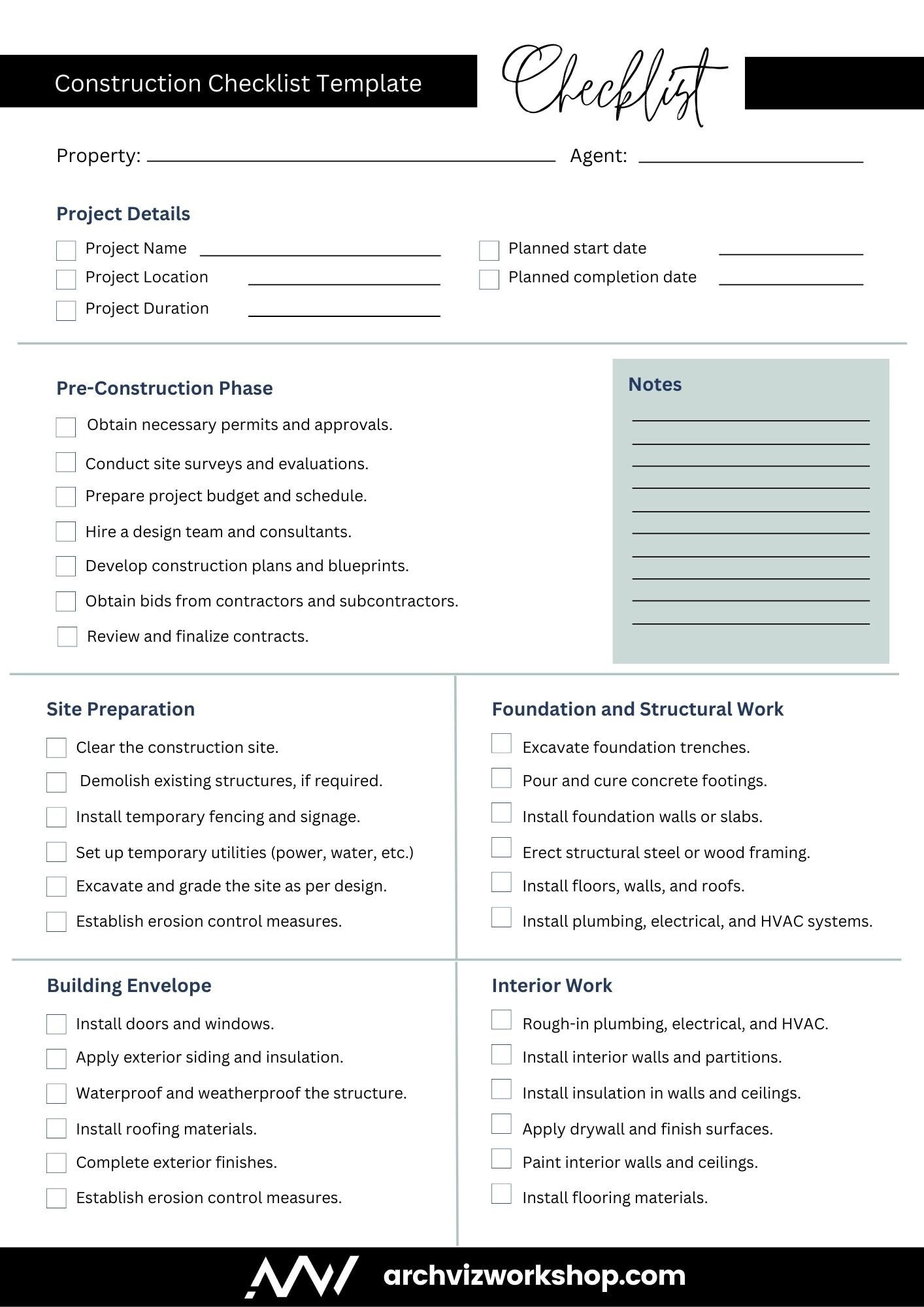
Balance detail with usability by avoiding overly long lists that discourage thoroughness. Use checkboxes, short answer lines, and simple ratings like pass, fail, or N/A to keep completion fast and consistent. Consider adding conditional items that appear only when certain answers are selected, if you are using a digital form builder. Regularly review how the checklist is used in practice and refine wording, order, and grouping based on real world feedback from the teams on the ground.
Integrate Safety, Quality, and Compliance Checks
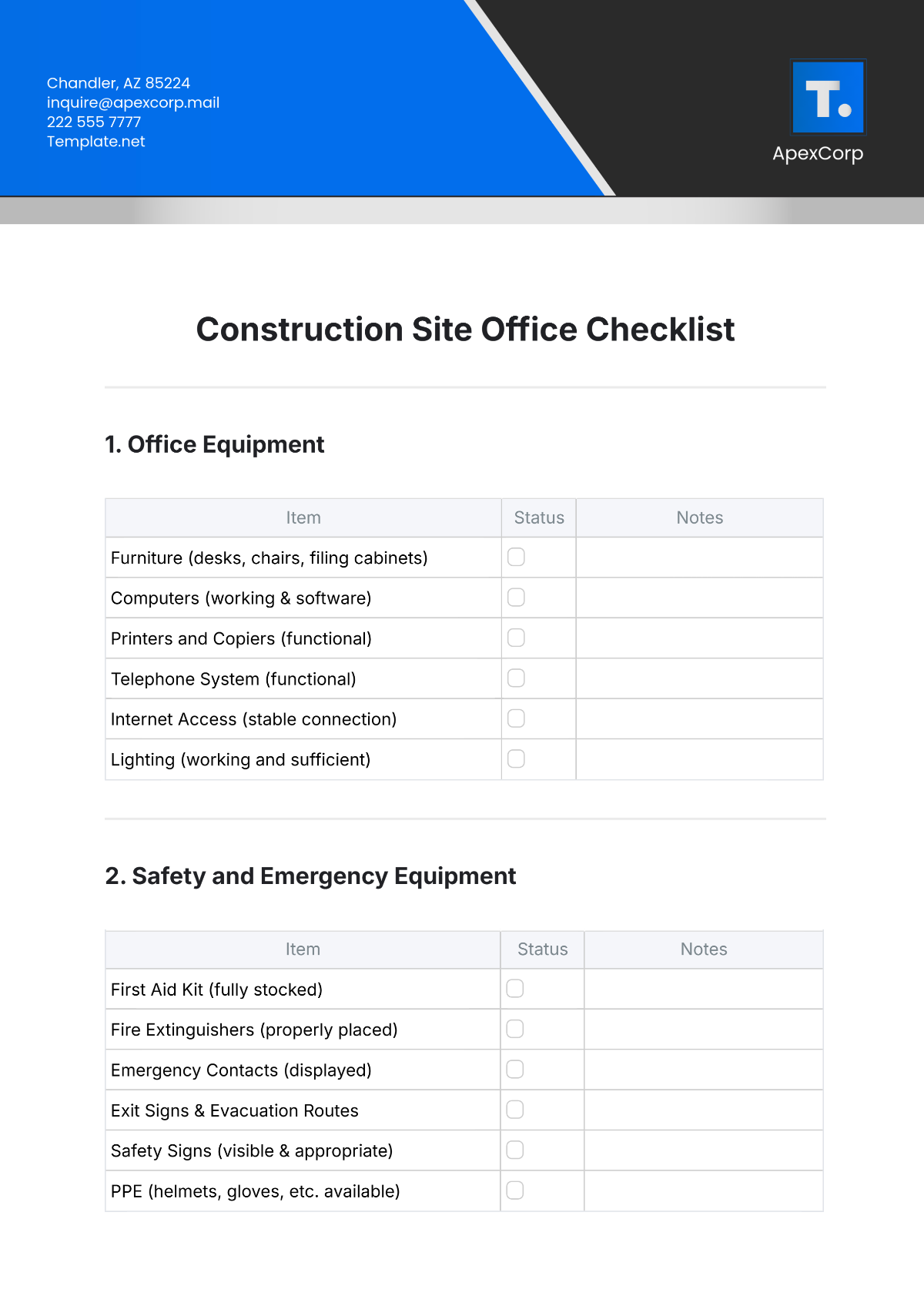
Safety should be woven into every section of your construction site checklist, not treated as a separate afterthought. Include items for personal protective equipment, fall protection, hazard communication, emergency procedures, and safe work practices for cranes, scaffolding, and excavation. Link each safety item to a specific observation point, such as checking that guardrails are intact or that hot work permits are displayed and current. This focus turns the checklist into a practical tool for preventing accidents and near misses.
Quality control items ensure that work meets contract specifications and that defects are caught early, before rework becomes expensive. Examples include verifying concrete slump, inspecting joint sealing, confirming that tolerances are met for finishes, and reviewing documentation for materials and testing. Compliance related items might cover permits, inspections, environmental controls, and waste management, helping the site stay aligned with legal requirements and avoid costly delays. By combining safety, quality, and compliance in one structured checklist, you create a single source of truth that supports better decision making.
Use Data, Review, and Continuous Improvement
A checklist only delivers value when the information it captures is reviewed and acted upon. Set a routine for supervisors to collect completed sheets or digital reports, summarize key findings, and share trends with the project team. Use this data to identify recurring issues, such as frequent equipment problems or consistent lapses in a particular safety practice, and address root causes rather than symptoms. Regular review meetings help turn the checklist from a static form into a dynamic management tool that drives improvement.
Encourage feedback from workers in the field about the usefulness and clarity of each item, and be willing to revise the checklist when processes change or new risks emerge. Update documentation promptly after incidents, regulatory changes, or lessons learned from previous projects to keep the tool accurate and relevant. Over time, a well maintained construction site checklist becomes a trusted habit that strengthens safety culture, improves quality, and supports smoother project delivery across every job.
Complete Building Checklist for Facility Managers (Property Inspection Checklist)
In this video, I provide 10 building checklist items to consider for facility managers to include in your building checklist and why ...
