How To Manage A Construction Site

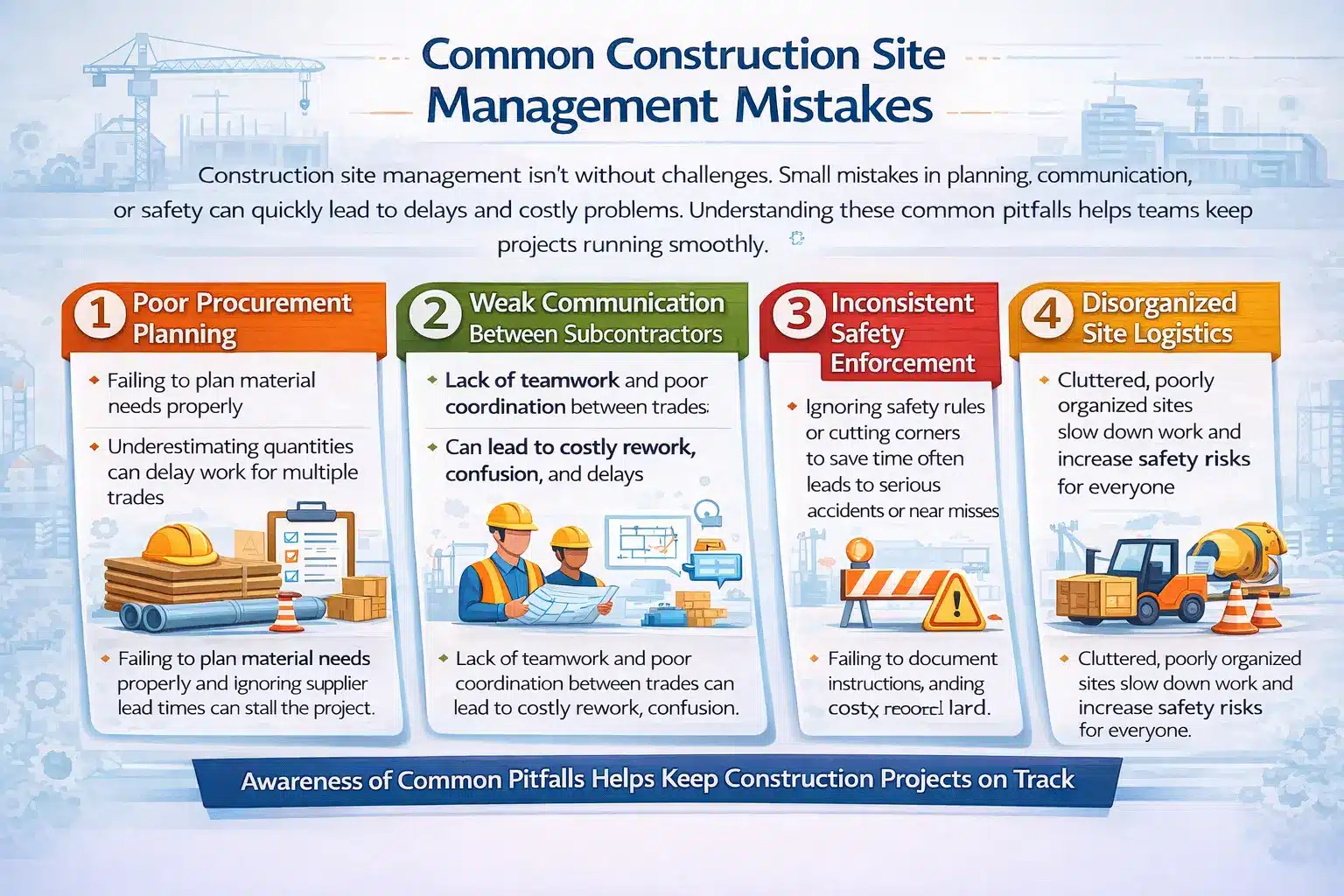
Managing a construction site effectively begins with clear planning, strong communication, and strict adherence to safety standards so that every phase of the project stays on schedule and within budget.
Establish a Solid Project Plan and Schedule
A successful construction site starts with a detailed project plan that outlines scope, deliverables, timelines, and responsibilities. Using a reliable schedule, such as a Gantt chart, helps you coordinate tasks, set realistic deadlines, and track progress at a glance. Build in buffer time for weather delays, material lead times, and permitting issues to keep the workflow smooth. Review and update the schedule regularly so the plan reflects actual conditions and keeps the team aligned.
Break the project into clear phases and assign specific milestones to each trade or subcontractor. Clearly define start and finish dates for key activities, and make sure everyone understands how their work impacts the next step. Digital tools can centralize documents, drawings, and change orders so the latest information is always accessible. When the plan is transparent and up to date, it becomes the foundation for efficient decision making and on-time delivery.
Implement Strong Safety Protocols
Safety is non-negotiable on any construction site, and proactive protocols protect workers, visitors, and the project itself. Develop a comprehensive safety plan that covers hazard identification, personal protective equipment requirements, and emergency procedures. Conduct regular toolbox talks and site inspections to catch risks early and reinforce safe habits before incidents occur.
- Ensure proper signage, barriers, and lighting around hazards such as excavations, overhead power lines, and moving equipment.
- Verify that all workers are trained on site-specific risks, fall protection, and safe handling of materials and tools.
- Encourage a culture where team members can stop work if conditions are unsafe and report concerns without hesitation.
Documenting safety meetings, inspections, and incidents not only supports compliance but also provides valuable data to improve future projects. When safety is woven into daily routines, productivity rises, accident rates drop, and the site runs more smoothly.
Coordinate Labor, Equipment, and Materials
Effective coordination of people, machines, and materials keeps the workflow continuous and reduces costly downtime. Create a clear schedule for labor deployment so the right number of workers with the right skills are on site at the right time. Maintain a simple system for tracking equipment usage, maintenance, and availability to avoid conflicts and unexpected breakdowns.

Manage material deliveries by aligning them with the construction sequence and verifying quantities before acceptance. Use checklists for receiving, storing, and issuing materials to minimize waste, damage, and theft. Keep storage areas organized, well marked, and compliant with regulations to support efficiency and safety.
Key Practices for Resource Coordination
- Use a shared calendar or dashboard to visualize crew, equipment, and material timelines.
- Confirm deliveries in advance and have a contingency plan for late or incorrect shipments.
- Perform regular audits of inventory and consumption to identify trends and reduce overordering.
When resources are planned and monitored carefully, the site stays productive, budgets are respected, and surprises become rare exceptions rather than daily obstacles.
Maintain Clear Communication and Documentation
Transparent communication keeps everyone informed and prevents misunderstandings that can lead to rework or delays. Hold regular meetings with contractors, subcontractors, and stakeholders to review progress, resolve issues, and confirm expectations. Use digital tools for real-time messaging, photo updates, and document sharing so information flows quickly and accurately.

Consistent documentation protects the team and the project by recording decisions, changes, and approvals as they happen. Maintain logs for daily reports, inspections, permits, and correspondence so you can trace the history of any issue. When records are organized and easy to find, it becomes much simpler to resolve disputes, close out tasks, and prepare for audits.
Monitor Progress and Control Quality
Ongoing monitoring of progress against the plan helps you spot deviations early and take corrective action before small issues become major problems. Use simple tracking tools to compare completed work with the schedule, and highlight areas that need attention. Regular walkthroughs by supervisors and quality checks at each stage ensure work meets specifications and contractual requirements.
Establish clear quality standards for materials, workmanship, and finishes, and make them known to every trade from the start. Encourage collaboration between trades to resolve interface issues on site rather than after the fact. When quality control is proactive and consistent, rework decreases, customer satisfaction increases, and the reputation of the team strengthens.
Adapt to Challenges and Drive Continuous Improvement
Even the best plans encounter unexpected challenges, and the ability to adapt calmly is what sets successful sites apart. Respond to weather, supply chain disruptions, or design changes with a clear decision process that evaluates impacts on time, cost, and safety. Communicate adjustments promptly to all stakeholders so everyone understands the new expectations.
After each project phase or at project close, conduct a lessons learned session to capture insights and best practices. Use this feedback to refine processes, update checklists, and improve performance on future projects. Over time, a culture of continuous improvement turns every site into a more efficient, safer, and more profitable environment.
Effective construction site management blends careful planning, rigorous safety, smart resource coordination, and clear communication to deliver results people can trust. By monitoring progress, controlling quality, and learning from each project, you create a resilient system that performs well under pressure. With consistent execution and a focus on continuous improvement, every site you manage becomes more predictable, more efficient, and more successful.
How To Manage A Construction Project (Step-by-Step)
Let's Scale & Automate your Construction Business Together! Join Automation Blueprint Here: https://jesselane.com/coaching ...
