Jad Joint Application Design
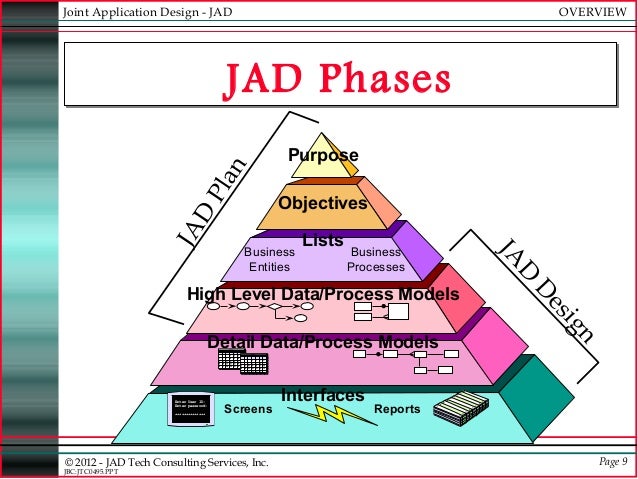
Joint Application Design (JAD) brings stakeholders together in structured workshops to define requirements and design solutions collaboratively.
What is Joint Application Design (JAD)
Joint Application Design (JAD) is a facilitated workshop approach that gathers business users, stakeholders, and IT professionals to explore, clarify, and document requirements in a focused, time-boxed setting. Unlike traditional, interview-heavy methods where analysts gather information in isolation, JAD emphasizes real-time collaboration, group discussions, and shared decision-making. The result is a clearer, more complete understanding of needs, fewer misunderstandings, and stronger ownership of the solution by the people who will use it.
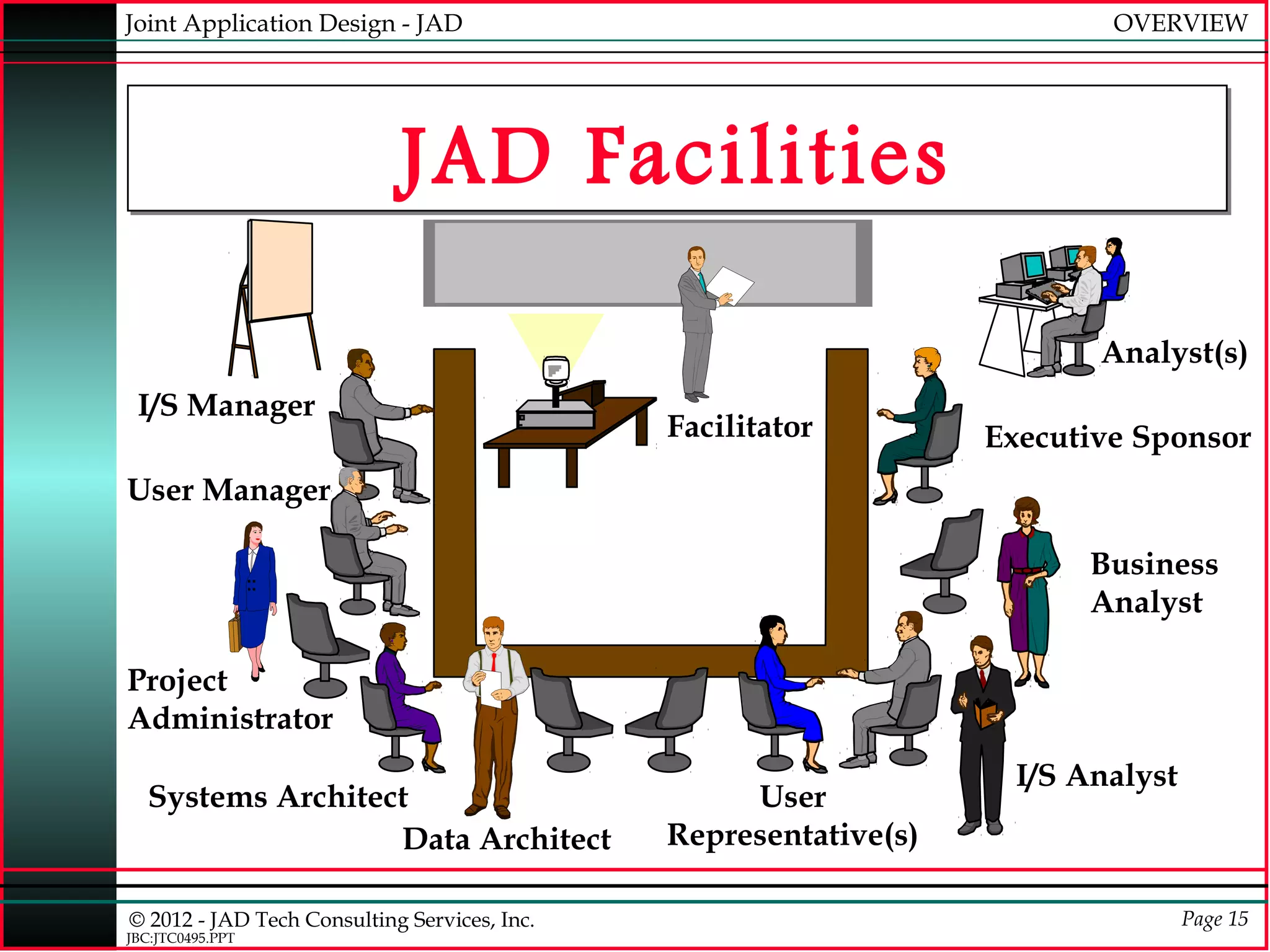
Originally popularized for software development, JAD has proven valuable across many domains, including process improvement, system integration, and business process reengineering. The technique relies on a skilled facilitator who guides participants through structured exercises, ensures balanced participation, and keeps the group aligned with predefined objectives. By bringing diverse perspectives into the same room at the same time, organizations can surface hidden requirements, resolve conflicts early, and accelerate decision cycles.

Core Principles of Effective JAD Sessions
Successful JAD sessions are built on a few foundational principles that keep discussions productive and outcomes actionable. First, clear objectives and scope must be defined before inviting participants, so everyone understands the problem and expected deliverables. Second, the facilitator plays a critical role in maintaining neutrality, managing time, and guiding structured techniques such as brainstorming, process modeling, and prototyping exercises.
Third, preparation is essential; participants need background materials, such as current process maps or user stories, so that workshop time is spent refining ideas rather than gathering basic information. Finally, documentation should be updated in real time or immediately after the session, with minutes and models reviewed and agreed upon before the workshop concludes. These practices help ensure that JAD remains a disciplined method rather than an unstructured discussion.
- Define clear goals, scope, and success criteria up front
- Select the right mix of stakeholders and decision-makers
- Engage a neutral, skilled facilitator to guide the session
- Prepare materials and workspace to support collaboration
- Document decisions and requirements live for immediate validation
Common JAD Techniques and Activities
JAD sessions employ a variety of techniques to draw out requirements, explore alternatives, and validate designs. Brainstorming, round-robin discussions, and role-playing help participants think creatively and consider edge cases. Process modeling and flowcharting, either on whiteboards or digital tools, allow groups to visualize current and future states, identify bottlenecks, and agree on improvements. Prototyping, even low-fidelity sketches or clickable wireframes, can be used to test interface concepts and gather rapid feedback.
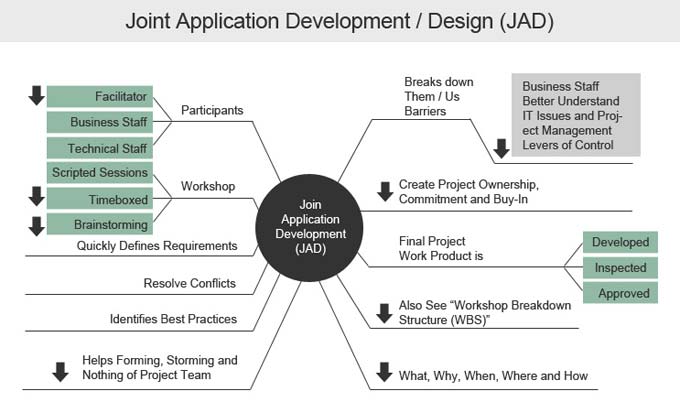
Another powerful technique is the use of focused interviews and group discussions to clarify ambiguity and reconcile differing viewpoints. The facilitator may also employ decision-making methods, such as voting or weighted scoring, to resolve conflicts when consensus is not immediately reached. By combining structured activities with open dialogue, JAD encourages participants to build on each other’s ideas while staying aligned with project goals.
Benefits of Using JAD in Projects
One of the most significant advantages of JAD joint application design is the speed at which high-quality requirements and designs can be produced. By involving users and stakeholders directly, organizations reduce the risk of building the wrong solution and minimize costly rework later in the lifecycle. Early validation of ideas also boosts confidence among sponsors and increases user adoption, because those who will use the system have already shaped its direction.
JAD also fosters better communication across departments and disciplines, breaking down silos that often lead to misalignment. The collaborative environment encourages shared ownership of outcomes, making it easier to secure support for implementation. For complex initiatives, this approach can shorten timelines, improve requirements accuracy, and create a stronger foundation for testing and development.

When and How to Apply JAD Effectively
JAD is most effective when requirements are unclear, stakeholders have differing views, or time constraints demand rapid convergence. It works well for defining new applications, redesigning processes, or integrating systems where alignment among business and technical teams is critical. Projects with high complexity, regulatory considerations, or significant change impact often benefit from structured JAD workshops.
To apply JAD effectively, start by identifying clear objectives and selecting participants who represent key perspectives and decision-making authority. Schedule sufficient time for sessions, ideally in a dedicated space that supports group work and visual collaboration. Follow up with detailed documentation, traceability to objectives, and a plan for reviewing and approving deliverables. By combining strong preparation with skilled facilitation, teams can maximize the value of joint application design and deliver solutions that truly meet user needs.
Conclusion
Joint Application Design remains a powerful method for aligning business and technology around shared goals, fostering collaboration, and accelerating delivery of well‑defined solutions. When facilitated effectively, JAD transforms requirement gathering from a series of disconnected interviews into a dynamic, engaging workshop that produces actionable outcomes. Organizations that invest in training facilitators and refining their JAD practices can consistently achieve higher-quality requirements, stronger stakeholder engagement, and more successful project results.
Sucesso Colaborativo: Explorando a Metodologia JAD
Neste vídeo, mergulhamos no mundo da metodologia JAD e exploramos seus benefícios na gestão de projetos. Junte-se a nós ...
