Leonardo Da Vinci's Mona Lisa
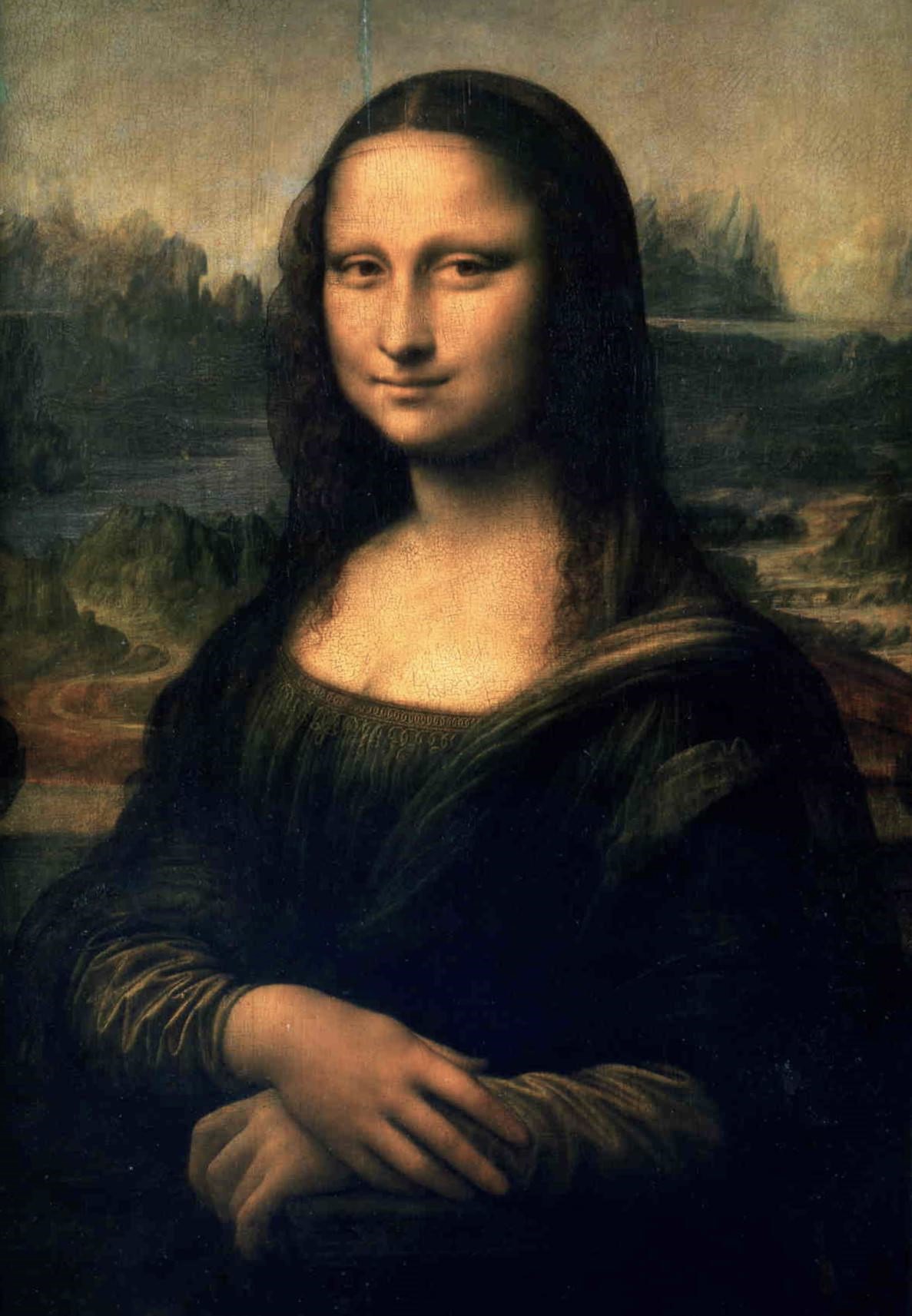
Few works of art capture the imagination as completely as Leonardo da Vinci's Mona Lisa, a portrait that has fascinated viewers for centuries with its quiet mystery and technical mastery. Painted during the Renaissance in the early sixteenth century, this small panel portrait by Leonardo has become a global icon, instantly recognized and endlessly discussed in popular culture, scholarship, and everyday conversation. The painting's subtle modeling of light, the sitter's enigmatic expression, and the landscape behind her invite repeated looking and repeated interpretation, ensuring that Leonardo da Vinci's Mona Lisa remains at the center of art historical study and public curiosity.
The Life of Leonardo da Vinci and the Context of the Portrait
Leonardo da Vinci was a quintessential Renaissance figure, trained as a painter, sculptor, engineer, scientist, and thinker. He moved between Florence, Milan, and Rome, carrying notebooks filled with anatomical studies, engineering sketches, and artistic ideas that shaped his approach to every commission. The portrait known as the Mona Lisa is thought to depict Lisa Gherardini, the wife of Florentine merchant Francesco del Giocondo, which is why the painting is also called La Gioconda in Italian. Leonardo worked on this painting for several years, refining details, adjusting the sitter's pose, and experimenting with layers of translucent paint to achieve a lifelike presence.
In Florence, where portraiture was increasingly concerned with individual character and inner life, Leonardo pushed beyond straightforward likeness. He combined careful observation of anatomy with an imaginative vision of landscape, creating a background that seems to dissolve into atmospheric haze. This blending of portrait and landscape was innovative at the time and reflects Leonardo's broader interest in how light, air, and distance affect what we see. The result is a work that feels both intimate and strangely distant, as if the sitter belongs to a world just beyond our reach.
The Technique and Visual Details of the Painting
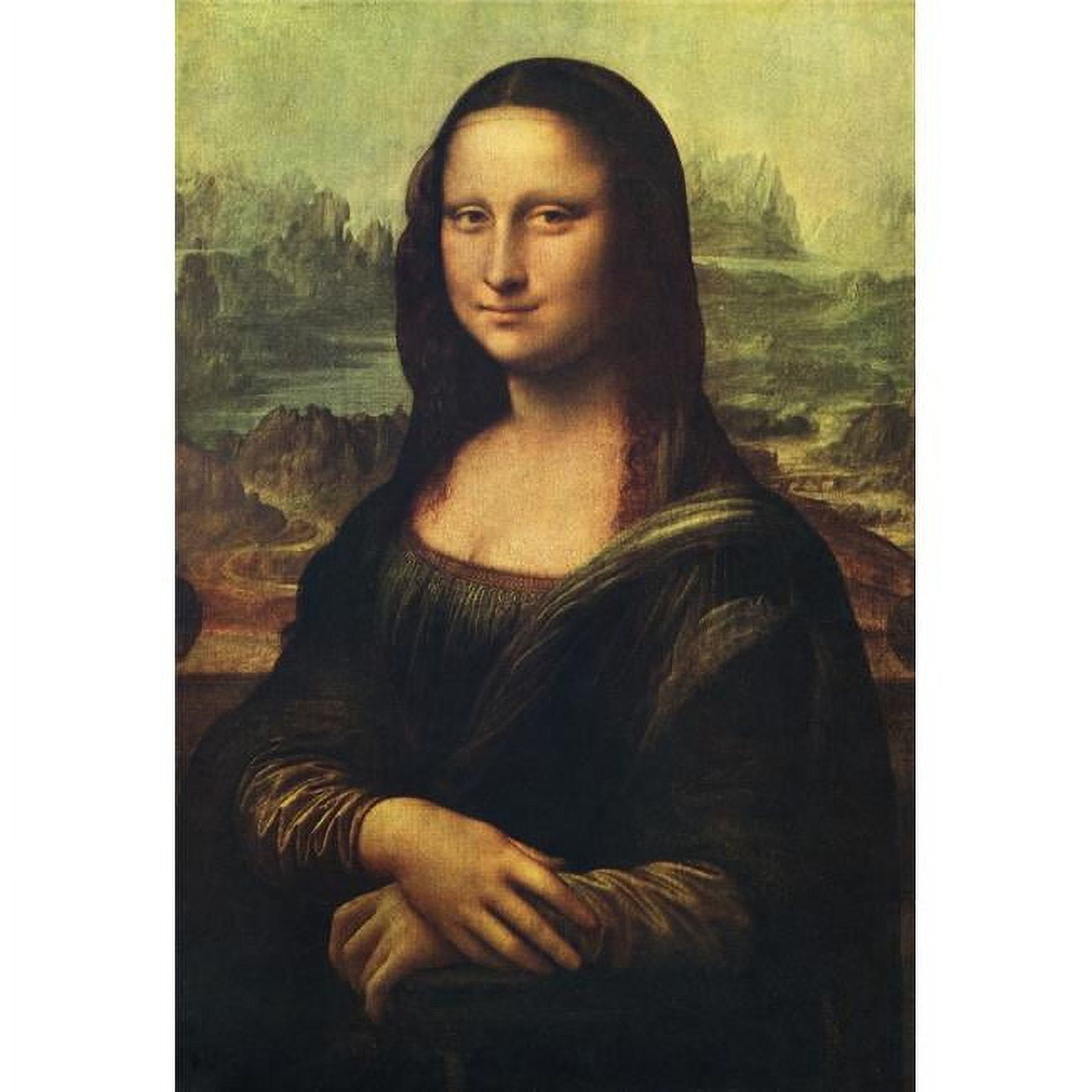
Leonardo's use of sfumato, a delicate gradation of tone and color, gives the Mona Lisa its soft, almost smoky modeling of forms. Instead of sharp outlines, he built up layers of thin glazes, allowing edges to blur gently so that faces, hands, and folds of clothing seem to emerge gradually from the paint film. This technique is especially evident around the corners of the eyes and mouth, where slight shifts in tone suggest changes of expression without clearly defined lines. The subtle modeling of her cheeks, the gentle transition from lip to skin, and the atmospheric depth of the background all showcase Leonardo's mastery of tone, contrast, and spatial nuance.
- Soft, almost imperceptible modeling around the corners of the eyes and mouth.
- Fine layering of translucent glazes to create depth and luminosity.
- Use of atmospheric perspective in the background landscape, with cooler colors and less detail in the distance.
- Meticulous attention to the sitter's posture, with hands folded calmly in front of her.
The composition is carefully balanced, with the sitter seated in a three quarter pose that guides the eye from her face along her arm and toward the landscape. Her direct yet enigmatic gaze seems to follow the viewer, creating a sense of engagement that feels unusually personal for a Renaissance portrait. The landscape behind her, with winding paths, bridges, and imagined rock formations, adds a moody, timeless setting that contrasts with the precise clarity of her figure.
Why the Mona Lisa Became So Famous
During Leonardo's lifetime and shortly after, his work was admired by collectors and fellow artists, yet the Mona Lisa did not become a global celebrity until much later. In the nineteenth century, writers and critics began to emphasize its poetic qualities, and the painting's mysterious smile sparked endless speculation about emotion, psychology, and artistic intention. Its fame grew further when the portrait was stolen from the Louvre in 1911, an event that captured international headlines and turned the image into a symbol of cultural treasure. Recovery of the painting only reinforced its status as an object of fascination and desire.
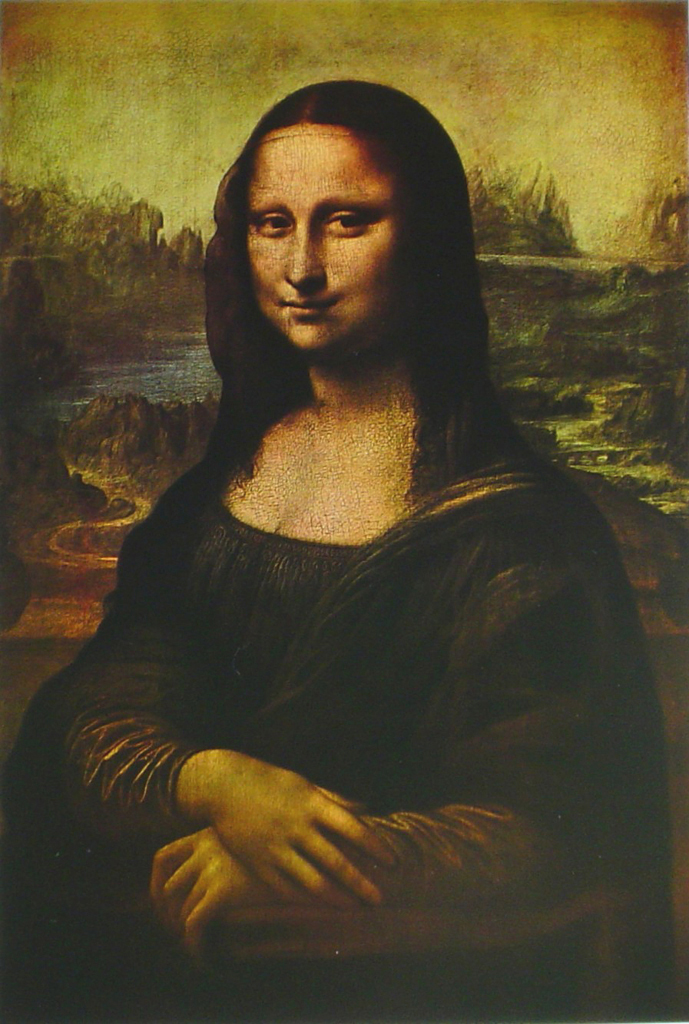
Today, Leonardo da Vinci's Mona Lisa is seen not only as a masterpiece of technique but also as a cultural phenomenon. Reproductions appear on everything from postcards to high fashion, and countless reinterpretations in literature, film, and art refer back to her elusive smile. Scholars continue to debate the exact meaning of the landscape, the significance of her expression, and the order in which Leonardo executed the work. This combination of technical brilliance, historical resonance, and popular visibility ensures that the portrait remains a touchstone for conversations about art, beauty, and the nature of seeing.
Enduring Questions and Interpretations
One of the most persistent questions about the Mona Lisa is why her expression seems to change depending on where and how long we look at it. Some viewers describe her as serene, others as melancholic or quietly amused, and scientific studies have suggested that peripheral vision, subtle contrast, and our own expectations all influence what we perceive. Leonardo's careful balancing of realism and idealism, individuality and archetype, allows each viewer to find a different emotional narrative in the portrait.
Art historians continue to explore the painting's materials, underdrawings, and possible changes made during composition, using advanced imaging techniques to reveal details once hidden beneath later layers. These studies deepen our understanding of Leonardo's process while also preserving the sense of mystery that surrounds the work. Ultimately, the enduring power of Leonardo da Vinci's Mona Lisa lies in its ability to combine precise observation with poetic imagination, inviting us to keep looking, questioning, and returning to a portrait that seems to reveal new layers with every encounter.

12 MISTÉRIOS da MONA LISA - Porque ELA É TÃO FAMOSA?
0:00 - OS MISTÉRIOS DA MONA LISA - PORQUE ELA É TÃO FAMOSA? 0:20 - QUEM FOI LEONARDO DA VINCI? 1:33 - A ...
