The Allegory Of A Cave
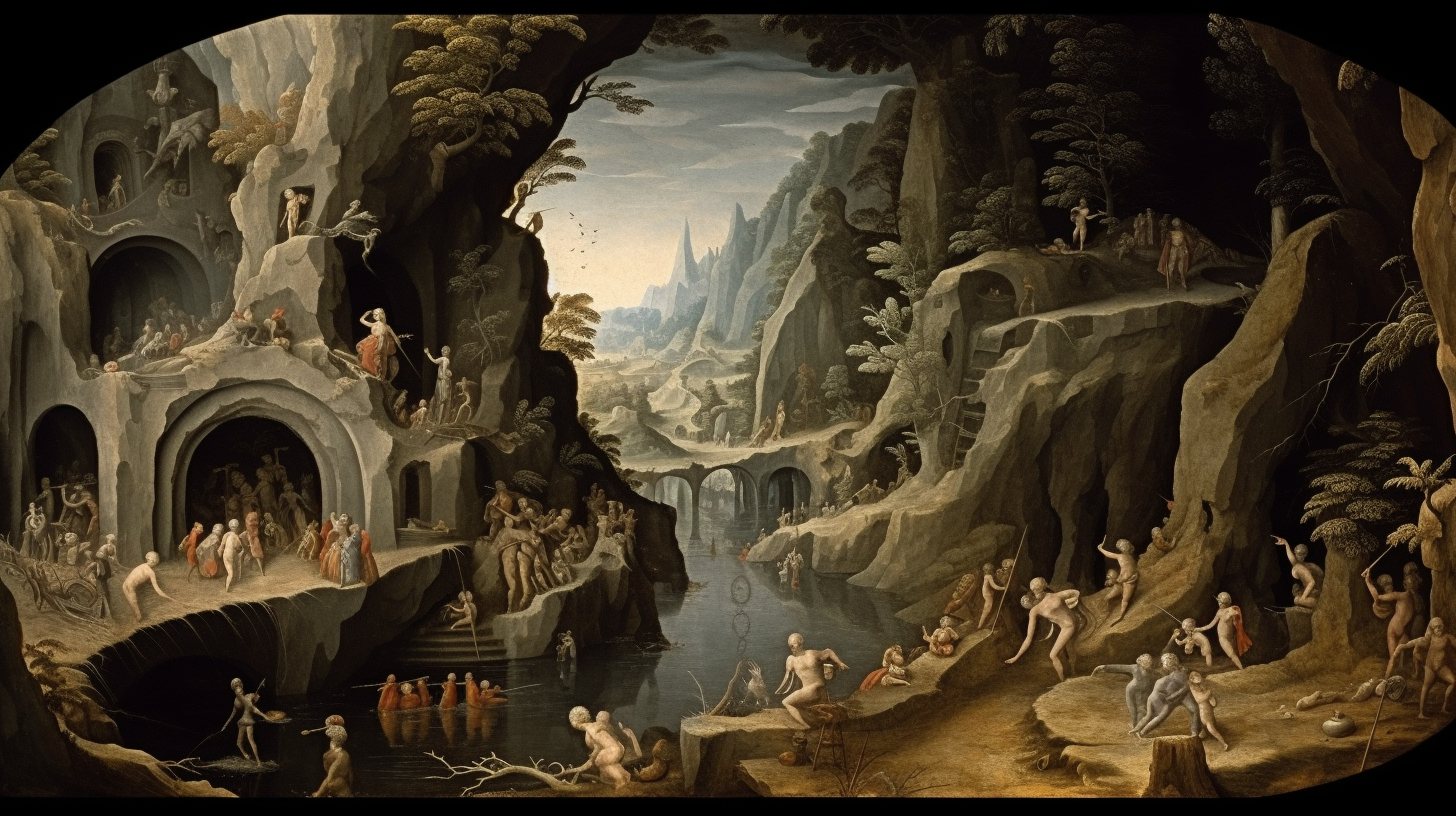
The allegory of the cave invites us to question how much of what we call reality is actually a shared illusion. In this timeless image from Plato, prisoners mistake shadows for truth, and their journey out of the cave becomes a powerful symbol for education, awakening, and the courage to see more clearly. By exploring this allegory, we confront the limits of ordinary perception and the responsibility that comes with greater insight.
Imagining the Cave and Its Prisoners
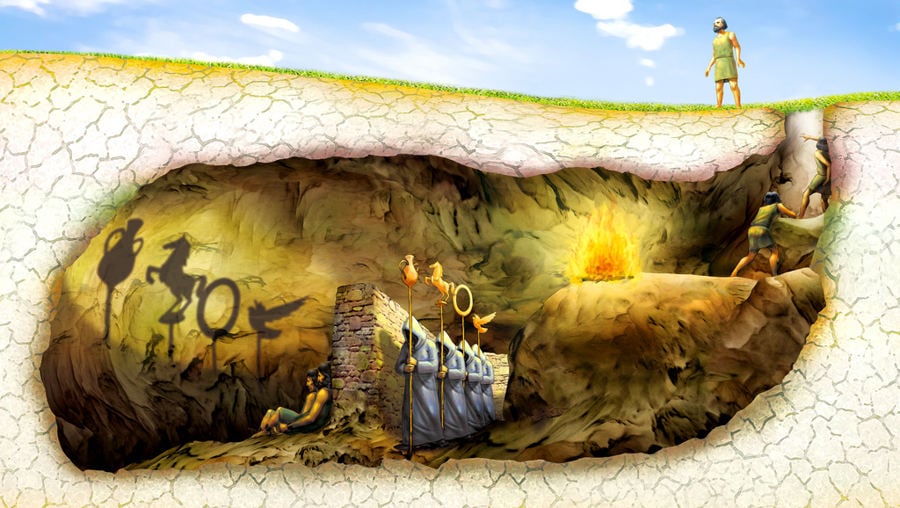
In the allegory of the cave, people are held from childhood in an underground chamber, chained so they can only look straight ahead toward a wall. Behind them a fire burns, and between the fire and the prisoners is a raised walkway where figures carry objects that cast shadows on the wall. These shadows become the only world the prisoners know, and they name them, praise them, and believe the shadows are the full extent of what exists. Their reality is flat, convincing, and entirely dependent on the position of their bodies and the flickering light.
The cave itself functions as a metaphor for our ordinary habits of perception, where distraction and routine keep us facing the same blank surface. We often confuse the flickering images of opinion, rumor, and passing fashion with genuine understanding, not realizing how much is left unseen behind us. The allegory of the cave asks us to notice how easily we mistake familiar shadows for reality, whether those shadows appear in culture, media narratives, or our own unquestioned assumptions.
The Moment of Awakening and Initial Confusion
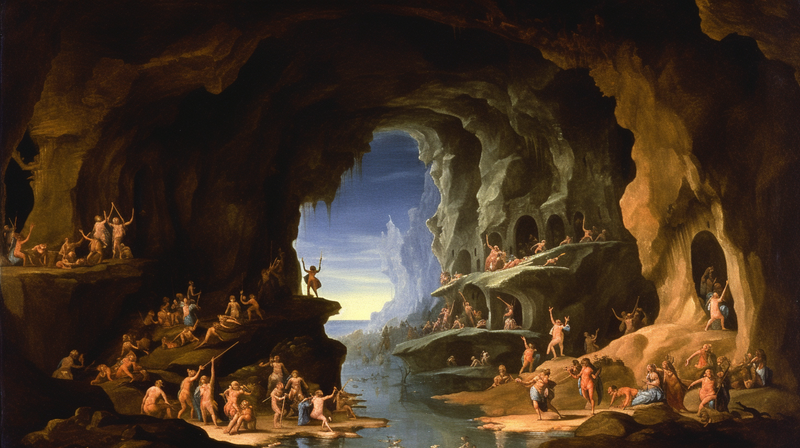
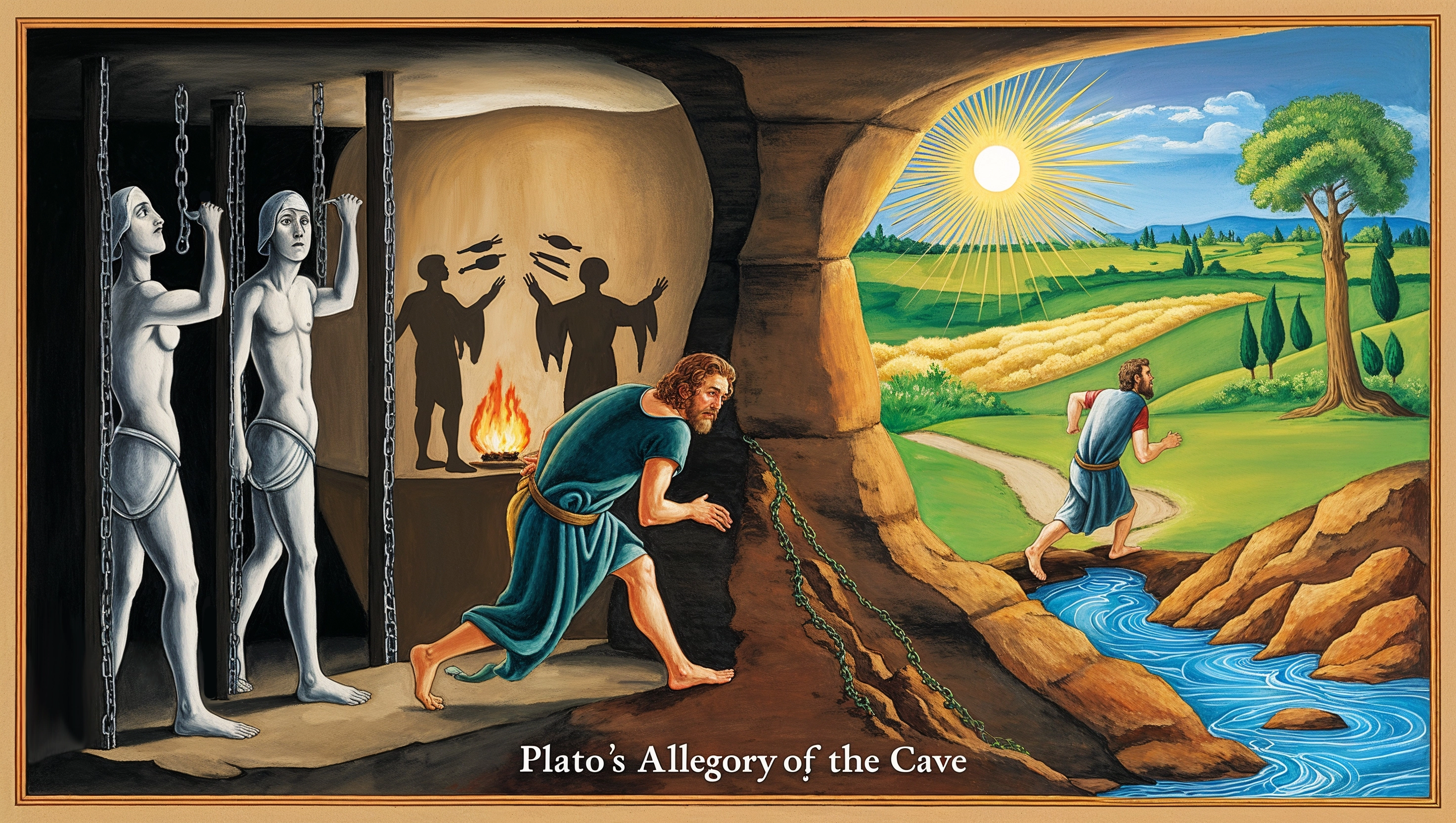
When one prisoner is freed and forced to turn toward the fire, the sudden light is painful and disorienting. Objects that were once mere shadows now reveal their three dimensional forms, and the former prisoner struggles to recognize what he has been missing. This moment of awakening captures the uneasy process of learning, in which old certainties dissolve before more accurate but unfamiliar truths can take hold.
At first the freed prisoner may feel ridiculous, tempted to return to the comforting darkness where everything seemed to make sense. The allegory of the cave highlights how difficult genuine transformation can be when our senses, language, and even our social rewards are aligned with the shadows. We often prefer the familiar half truth because it fits our expectations, and those around us may ridicule or resist the person who begins to see differently.
The Ascent Toward the Sun and True Reality
As the freed prisoner climbs out of the cave into the daylight, the journey becomes a symbol of philosophical education and ethical growth. At first the open world is overwhelming, but gradually the mind adjusts and the former prisoner can look directly at the sun, which represents the source of truth and reason. In this stage of the allegory of the cave, understanding is no longer tied to flickering reflections but to a stable, illuminating reality that makes the shadows intelligible.
This ascent invites us to examine our own intellectual habits, asking whether we are satisfied with quick impressions or willing to endure discomfort for deeper insight. The allegory encourages patience with ourselves and others, because the process of turning toward truth rarely happens all at once. Each time we question a comfortable assumption or revise a mistaken belief, we take another step out of the symbolic cave.
Returning to the Cave and the Responsibility of Knowledge
Plato does not leave the freed prisoner at rest in the sunlight; he describes a return to the cave, where the enlightened one must descend again among those still chained. The allegory of the cave at this point becomes a powerful image of leadership, teaching, and civic duty, because the one who has seen more is called to guide others without forcing them to move faster than they can bear. The return highlights the tension between compassion and truth, as the guide tries to help fellow prisoners while respecting their pace of awakening.
This phase of the story reminds us that knowledge is not merely personal enrichment but a shared responsibility. When we recognize patterns of injustice, misinformation, or harmful habits, the allegory asks how we can respond constructively. We can choose to speak clearly, to model better ways of seeing, and to create conditions where others feel safe enough to question the shadows that once seemed natural.
The Cave as a Mirror for Modern Life
In contemporary society, the allegory of the cave resonates in discussions about media, technology, and social influence. Endless streams of images, headlines, and curated profiles can function like shadows on the wall, shaping what we notice and how we value ourselves. Algorithms, echo chambers, and persuasive advertising invite us to inhabit comfortable caverns where confirming information is mistaken for genuine understanding.
Recognizing these modern shadows allows us to cultivate habits of critical thinking, deliberate reflection, and intentional use of tools that might otherwise control us. The allegory encourages us to periodically step back from the screen, question the narratives we consume, and seek out more complete perspectives. In doing so, we practice a form of intellectual freedom that echoes the journey from darkness toward light.
Living With Questions and Continuing the Journey
The allegory of the cave does not end with a final revelation but invites ongoing inquiry and humility. Even those who have climbed toward the sun acknowledge how limited their vision remains compared to the fullness of reality. This awareness keeps curiosity alive, encouraging dialogue, education, and openness to perspectives that differ from our own.

By treating the cave as a metaphor rather than a fixed description, we remain alert to new forms of hidden influence and new opportunities for growth. The story reminds us that questioning, learning, and sharing insight are lifelong practices. In this way, the allegory continues to inspire each reader to turn toward a clearer understanding of the world and of the self.
Plato’s Allegory of the Cave - Alex Gendler
View full lesson: http://ed.ted.com/lessons/plato-s-allegory-of-the-cave-alex-gendler Twenty four hundred years ago, Plato, one of ...
